
Hantavirus and Rodent Prevention in Colorado
Increased Indoor Mouse Activity During Cooler Weather Across Denver and Aurora
Updated May 2026
As temperatures fluctuate across Colorado this spring, Apex Pest Management has seen a noticeable increase in rodent activity indoors throughout Aurora, Denver, Centennial, Englewood, and surrounding areas.
Mice are actively moving into homes, garages, restaurants, warehouses, apartment buildings, and commercial facilities searching for warmth, food, water, and nesting areas. Seasonal temperature swings, cooler nights, rain, and late cold fronts commonly trigger increased indoor rodent pressure across the Front Range.
While rodents can cause contamination, property damage, and food safety concerns, they may also carry serious health risks including hantavirus.
If you are noticing scratching sounds, droppings, gnaw marks, or rodent activity inside your property, early action is critical.
What Is Hantavirus?
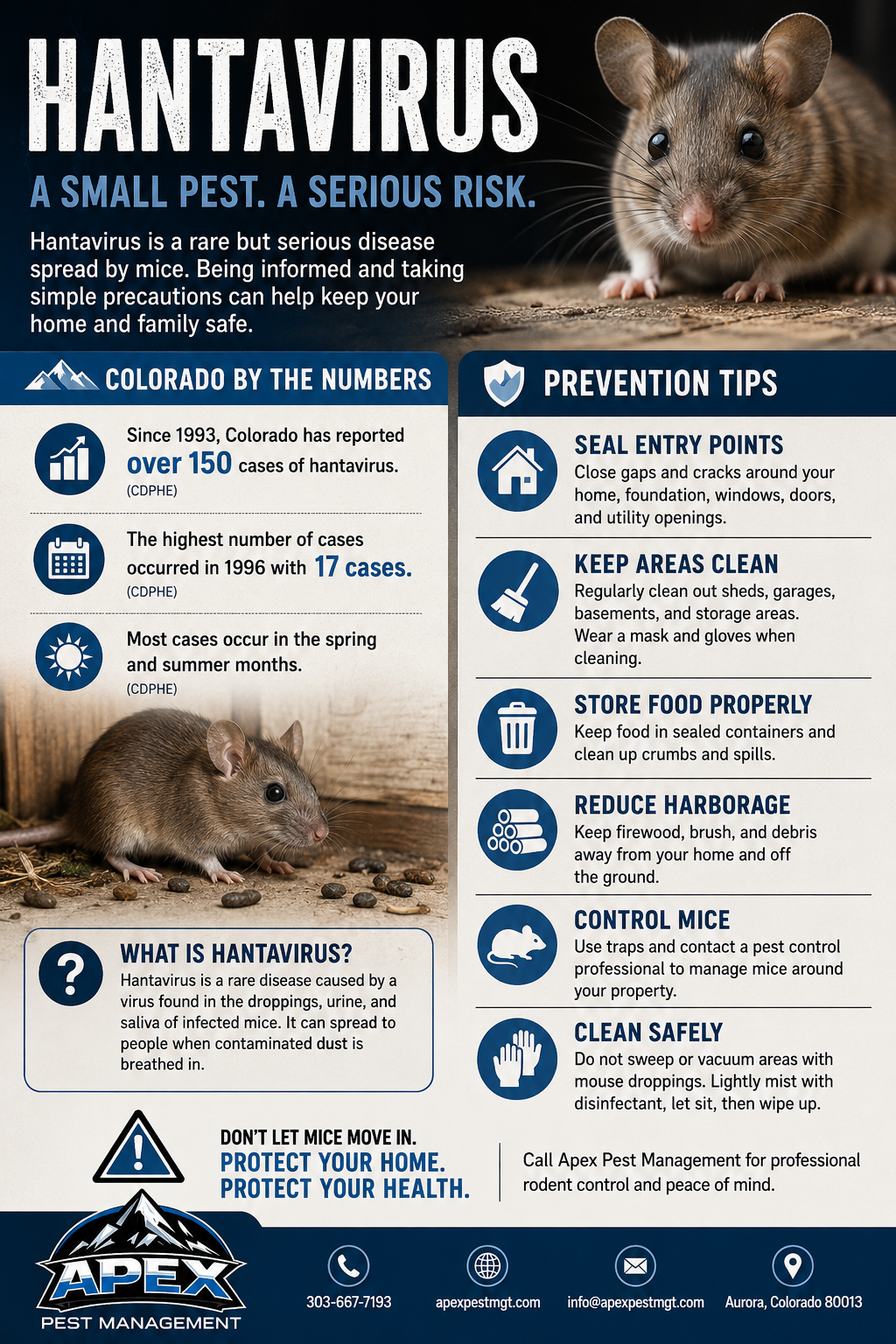
Hantavirus is a rare but potentially deadly virus associated primarily with infected deer mice, which are common throughout Colorado.
People may become exposed when airborne particles from rodent droppings, urine, saliva, or nesting materials are inhaled. This often happens during cleaning or disturbance of contaminated areas.
Common exposure locations include:
Garages
Crawl spaces
Storage sheds
Cabins
Basements
Utility rooms
Attics
Warehouses
Sweeping or vacuuming rodent droppings dry can release contaminated particles into the air, increasing exposure risks.
Colorado has reported hantavirus cases for years, especially in areas with increased deer mouse populations and rodent activity.
Common Signs of Rodent Activity Indoors
Mouse Droppings
Small dark droppings near food storage areas, cabinets, garages, utility rooms, or along walls.
Scratching Sounds
Noises inside ceilings, attics, basements, or wall voids, especially at night.
Gnaw Marks
Chewed food packaging, wires, insulation, cardboard, or structural materials.
Grease Rub Marks
Dark smudge marks along rodent travel pathways.
Nesting Material
Shredded insulation, paper, fabric, or debris hidden in storage areas or wall voids.
Strong Odors
Heavy infestations may produce musky odors indoors.
Health Risks Associated With Rodents
Rodents can contaminate surfaces, food products, insulation, and storage areas through droppings and urine.
Potential concerns associated with rodent infestations include:
Hantavirus exposure
Food contamination
Bacteria spread
Allergens
Electrical damage from gnawing
Structural contamination
Fire risks from damaged wiring
Commercial facilities, restaurants, warehouses, and multi-family properties are especially vulnerable to rapid rodent population growth if activity is not addressed early.
Hantavirus Prevention Tips for Colorado Homes and Businesses
Seal Rodent Entry Points
Close gaps around foundations, doors, garages, rooflines, vents, pipes, and utility penetrations.
Reduce Food Sources
Store food in sealed containers and clean spills promptly.
Eliminate Clutter
Reduce harborage areas in garages, basements, storage rooms, and crawl spaces.
Maintain Exterior Areas
Trim vegetation away from structures and remove debris piles or stored materials near buildings.
Avoid Dry Sweeping Rodent Droppings
Never vacuum or sweep droppings without proper precautions.
Use Proper Cleanup Procedures
Wear gloves and respiratory protection when cleaning contaminated areas and disinfect surfaces thoroughly before removal.
Why Rodent Activity Increases During Cooler Weather
As outdoor conditions become less favorable, rodents begin moving indoors searching for stable shelter and food sources.
Rodents are highly adaptable and can enter through surprisingly small gaps.
Common Rodent Entry Points
Garage door corners
Foundation cracks
Utility line penetrations
Roofline gaps
Dryer vents
Crawl space vents
Damaged weather stripping
Door sweeps
HVAC penetrations
Mice can squeeze through openings as small as a dime.
Once inside, rodents often nest in hidden low-traffic areas where they can reproduce quickly.
Professional Rodent Control in Denver and Aurora
At Apex Pest Management, we provide professional rodent inspections, trapping programs, monitoring services, and preventative rodent control solutions for residential and commercial properties throughout the Denver Metro area.
Our rodent programs focus on identifying the root causes of rodent activity instead of simply placing traps.
Services may include:
Rodent inspections
Rodent trapping
Exterior bait station programs
Rodent monitoring
Entry point identification
Rodent prevention recommendations
Sanitation and conducive condition reporting
Commercial rodent management programs
We provide detailed documentation and long-term prevention strategies designed to reduce recurring rodent issues.
Why Early Rodent Prevention Matters
Rodent populations can grow rapidly once nesting areas become established indoors.
Early intervention can help reduce:
Contamination risks
Property damage
Food safety concerns
Rodent reproduction
Health hazards associated with droppings and nesting materials
Ignoring early warning signs often leads to larger infestations and increased cleanup costs later.
Rodent Control Services Near You
Apex Pest Management proudly provides rodent control and rodent prevention services in:
Aurora
Denver
Centennial
Englewood
Greenwood Village
Parker
Littleton
Highlands Ranch
Denver Tech Center
Surrounding Colorado Front Range communities
Frequently Asked Questions
What rodents carry hantavirus in Colorado?
The deer mouse is the primary rodent associated with hantavirus cases in Colorado.
Does cooler weather increase mouse activity indoors?
Yes. Seasonal temperature drops commonly drive mice indoors searching for warmth and shelter.
Is one mouse a sign of infestation?
Often yes. Rodents reproduce quickly, and visible activity may indicate hidden nesting nearby.
How do mice enter homes?
Mice commonly enter through tiny openings around garages, foundations, rooflines, vents, utility lines, and doors.
Can rodent droppings be dangerous?
Yes. Rodent droppings may pose contamination and health risks if handled improperly.